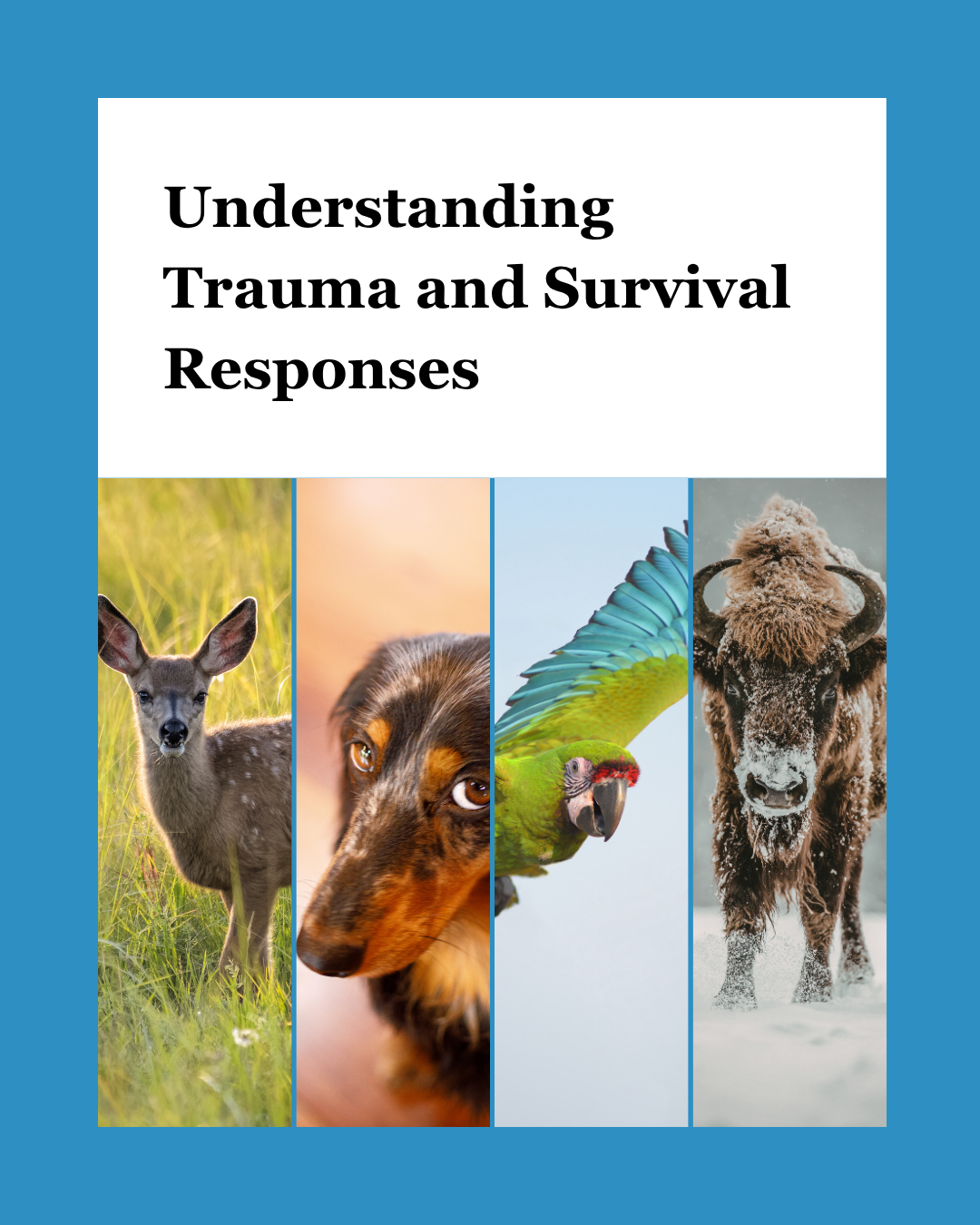
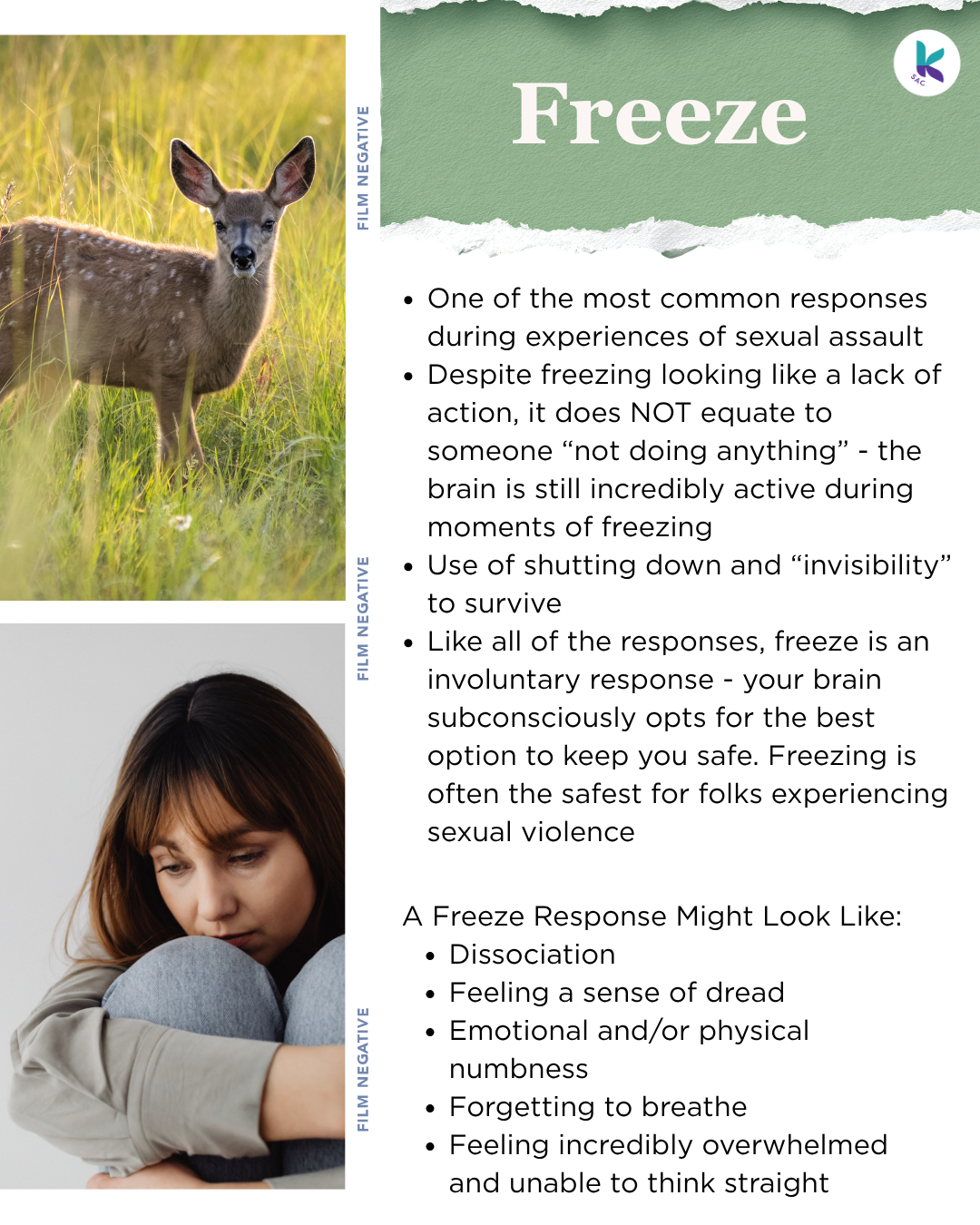
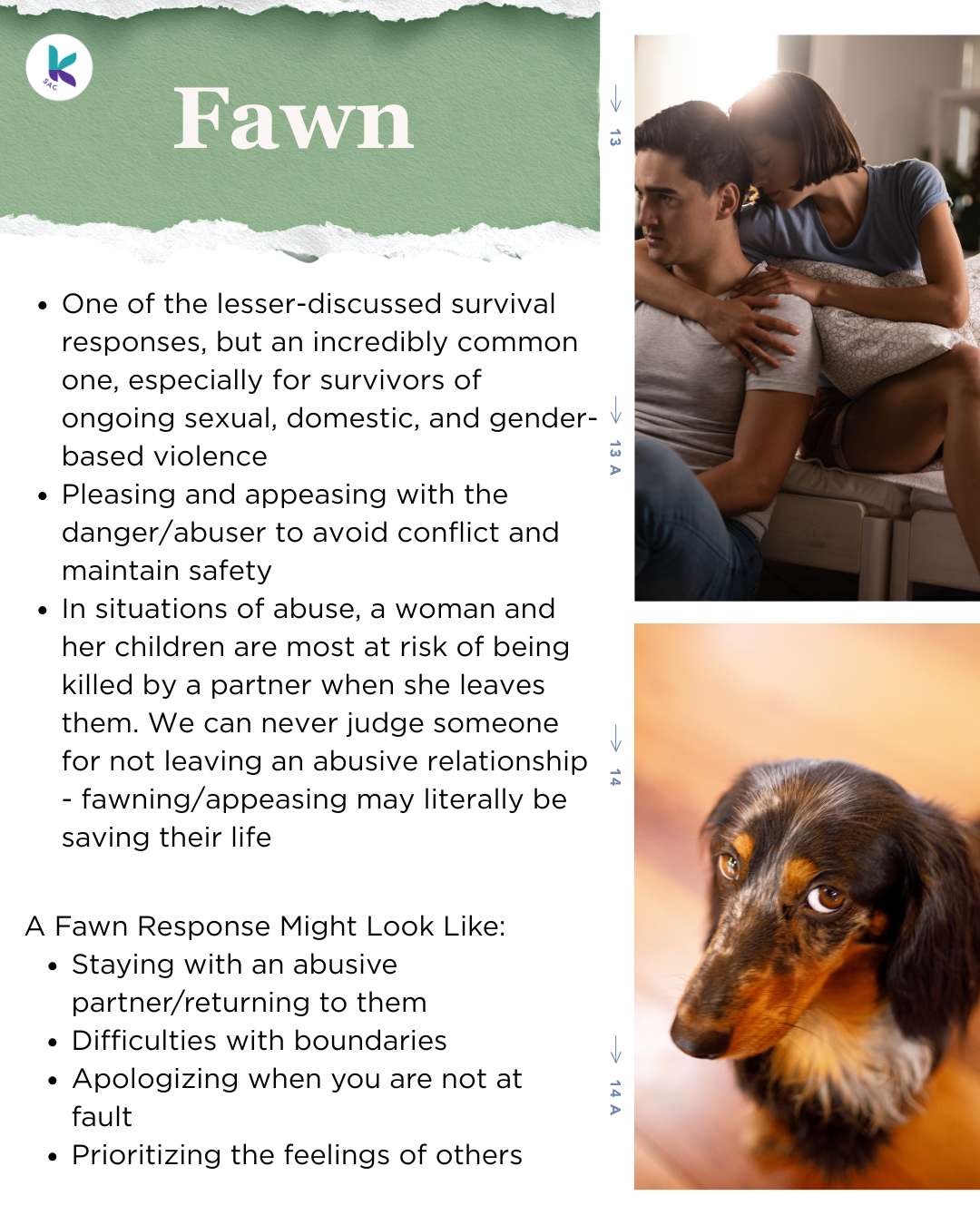
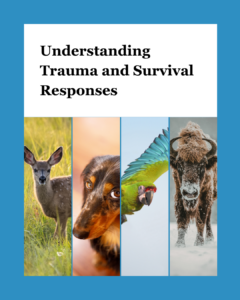
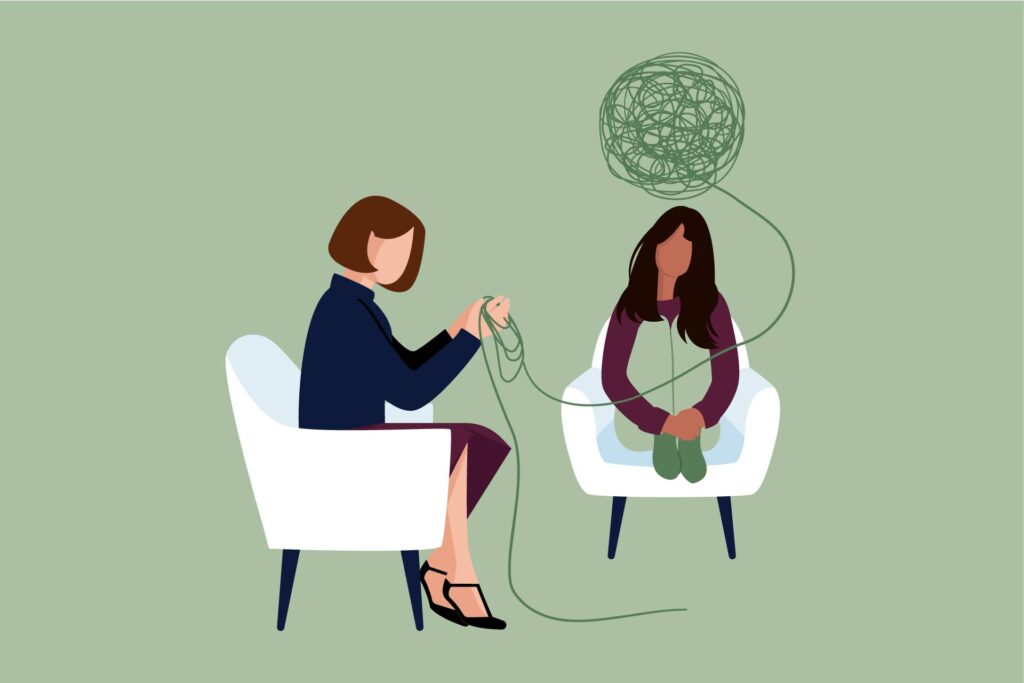
Learn about common responses and the difference between trauma and survival responses
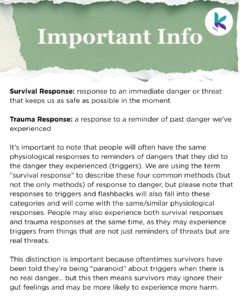
Responses to danger, harm, and stress are unconscious and save the lives of survivors. It’s important to know the differences between trauma and survival responses.
Survival responses are those that happen in the moment when we are faced with threat or danger, and trauma responses are responses to reminders of past dangers. The response someone had during an experience of harm is often the same response they may have afterwards when they experience triggers of that harm, but it might differ as well (remember, trauma responses are unconscious – our brains act before we have a chance to think about it as an evolutionary strategy to keep us as safe as possible in the face of harm).
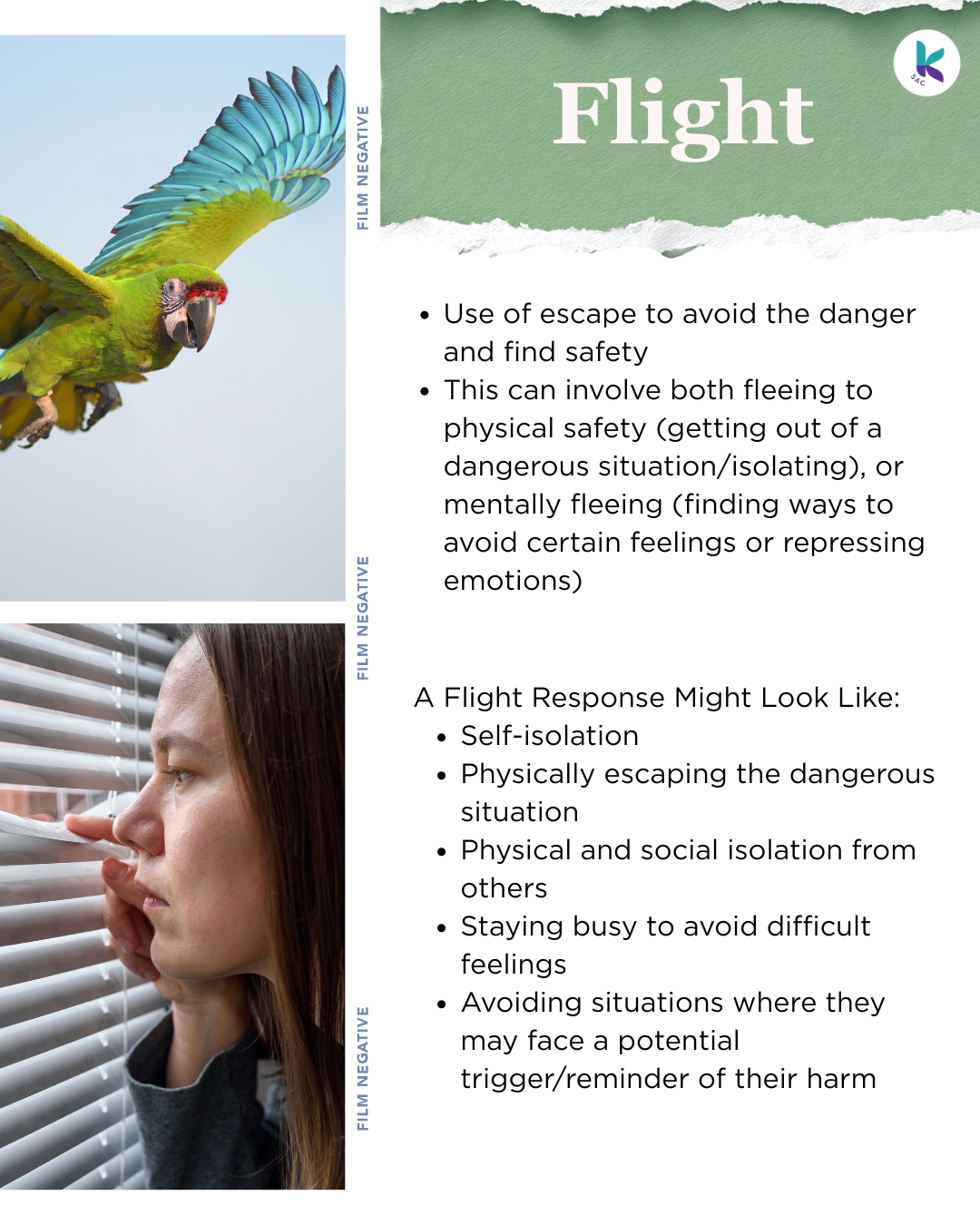
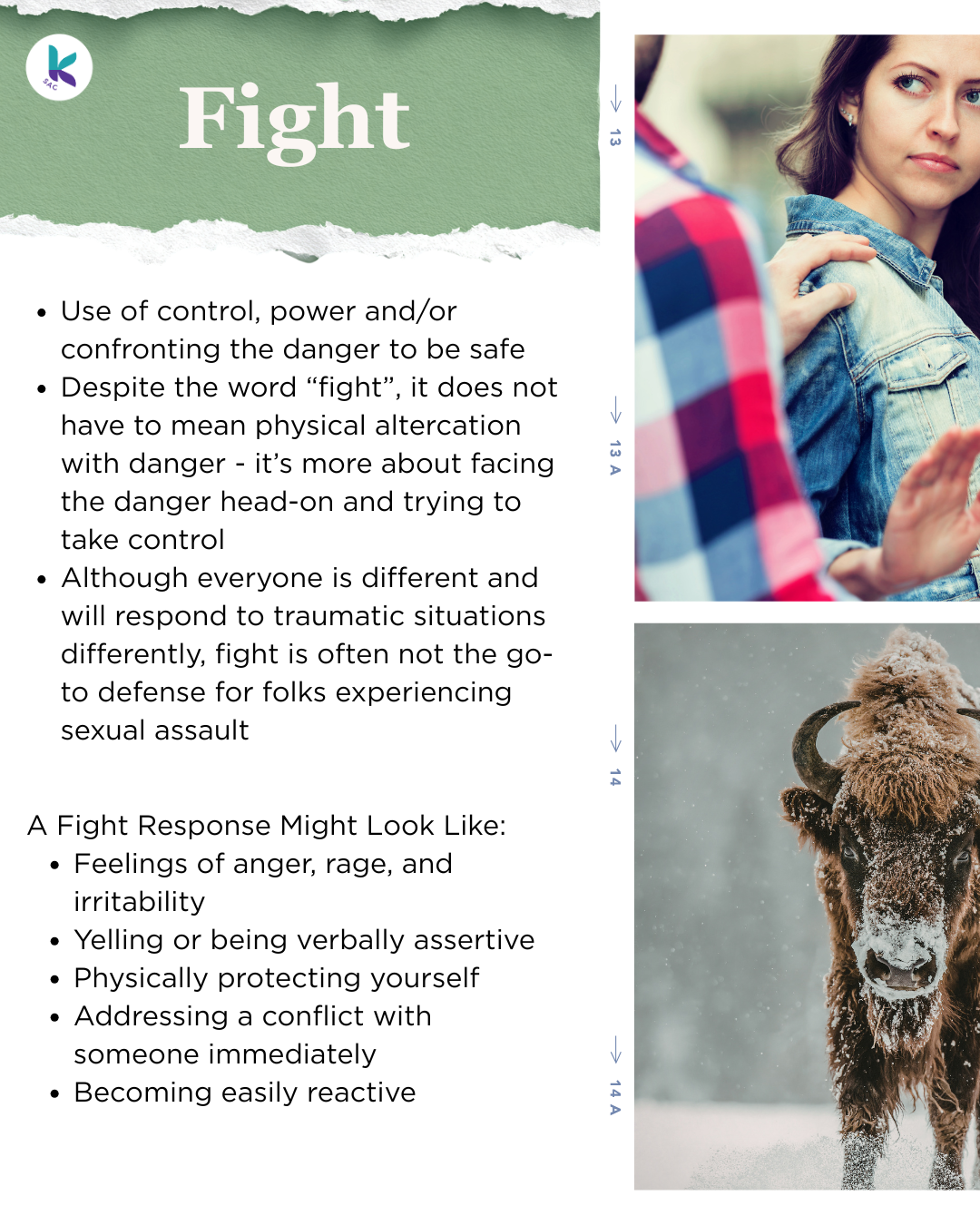
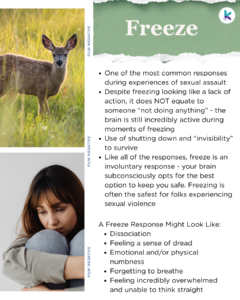
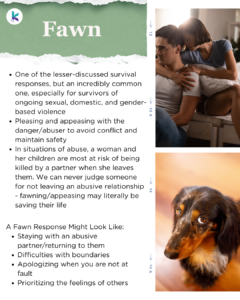
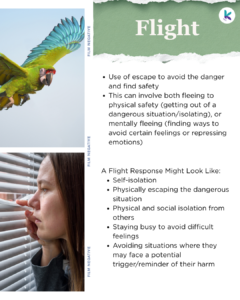
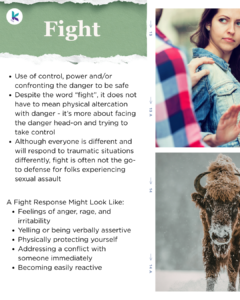
We’ve gone into details on four common trauma/survival responses (though there are others): freeze, fawn, flight, and fight. Survivors are often questioned about their actions when they have had unspeakable harm perpetrated against them, but it’s important to educate folks on how these responses are normal, unconscious responses our brains make behind the scenes. The brain, in survival mode, makes the decision to use whichever strategy will keep us the safest… it is not a conscious choice, and survivors should never be blamed for how they kept themselves safe.
This information is also important for the safety of survivors after they have experienced sexual violence – survival responses save lives. When survivors experience triggers and experience trauma responses, they’re often told that they’re “panicking for no reason” and that it’s “just a trigger they need to get over”. However, this puts survivors at more risk because if they encounter a situation where there truly is danger/threat of danger, if others have told them to ignore their instincts and what their body is telling them, they may have a greater chance of experiencing harm again.
There needs to be more education on how to navigate working through triggers to still be able to live daily life to the fullest, while also teaching survivors to trust their gut instincts and what their bodies tell them.
KSAC provides healing, safety, and support to those affected by sexual violence and harm, and aims to end sexual violence through prevention education within our communities.
Backgrounds, genders, sexualities, ages and abilities are treated with respect and dignity in a nonjudgmental and supportive environment at Kawartha Sexual Assault Centre.